


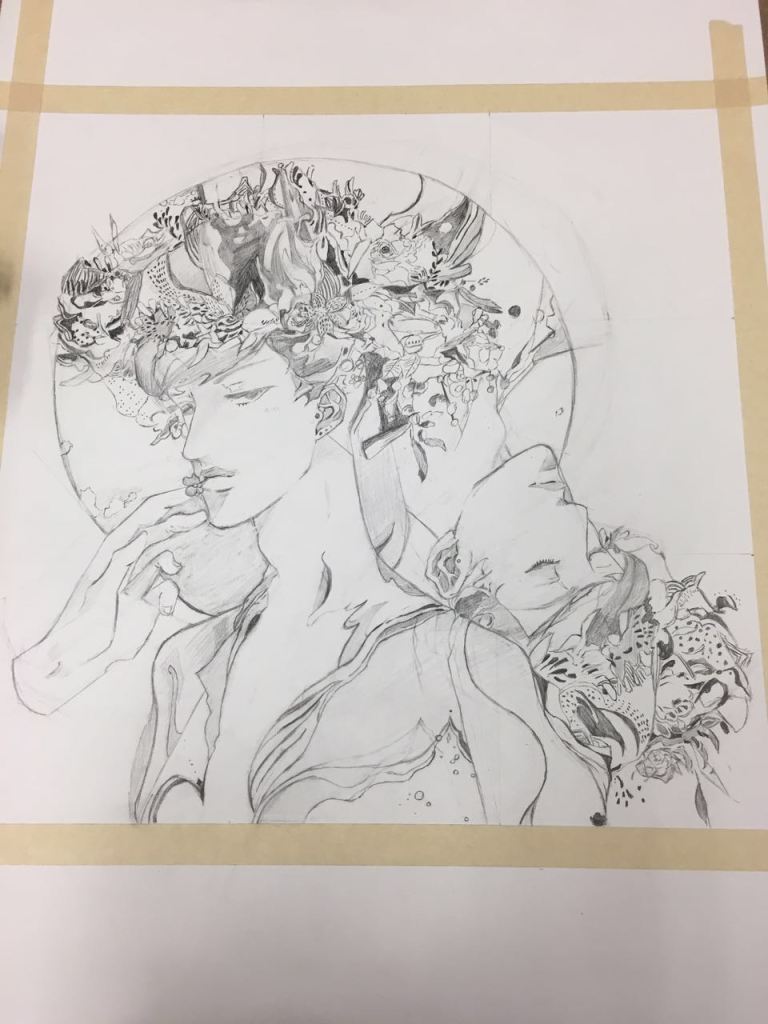

- artist statement
Drawing as a Noun
comics and other subcultures
In Drawing Now: Eight Propositions, Laura Hoptman says “with all respect to Serra, for many artists working today drawing is not a verb but a noun”.
She shows many works, including comics, fashion and all kinds of art that are not considered serious. She tells the story of how these works were rejected, how they were painted or made. The book is about how to define the traditional form and what remains of the time, and the story.
Chapter 7 is about comics and other cultures. It’s about Barry mcgee, Yoshitomo Nara Takashi Murakami. The core idea, I think, is that art should not be biased, “there is a bias against decoration and illustration in both Japanese and western aesthetics,” Matsumoto says, and Murakami’s cartoons directly test this assumption. “new concepts created by young American and Japanese artists in the 1990s” shares themes and styles with subcultures, as well as “subculture idioms including vernacular and naïve art, illustration and animation. The work of an artist or a doodler should not be seen in a different light. These are all products of art. They should not be displayed in a museum as sketches or murals. My view on this is that art can not be prejudiced or that Western aesthetics alone are successful. Art should be inclusive and tolerant.
I did three paintings, the first one was an illustration with a cartoon, and I drew people in two shapes, with all kinds of flowers. As I said, art should be inclusive, with each flower representing a different artist or Doodler. Or you can think of them as different ways of drawing. We should all be looking, or closing our eyes, at the work of those who created it. We should accept the impact of subculture and accept. The second painting is a rhinoceros, which uses the authenticity of the sketch expression. These three are used different techniques and materials to draw, to express the definition of art.
From narrative art to Japanese and western manga and animation, from UKIYOE artist Katsushika Hokusai to pop artist Warhol. The Panorama is also flat: Japan is seen as a surface, like a projection on glass. “No one has yet taken seriously the image created by the fusion of entertainment and art, but it has happened,” says Murakami, who with Nara has become a leading practitioner of the ultra-flat ideal.
 SHUWEN