

Eclipsed Time” by Maya Lin (1994)A conceptual clock in Penn Station that uses light and shadow to mark time

Untitled (Perfect Lovers)” by Félix González-Torres (1987-1991): Two synchronized clocks gradually fall out of sync, representing mortality and the passage of time

“The Persistence of Memory” by Salvador Dalí (1931): Famous for its melting clocks, this painting challenges traditional perceptions of time

Woman and Clock” by Louise Bourgeois (1994): Explores the desire to control the passage of time and reflects on memory and the biological cycles of life

“Memento Mori” mosaic from Pompeii (1st century BC): A reminder of mortality with symbols of wealth, poverty, and death
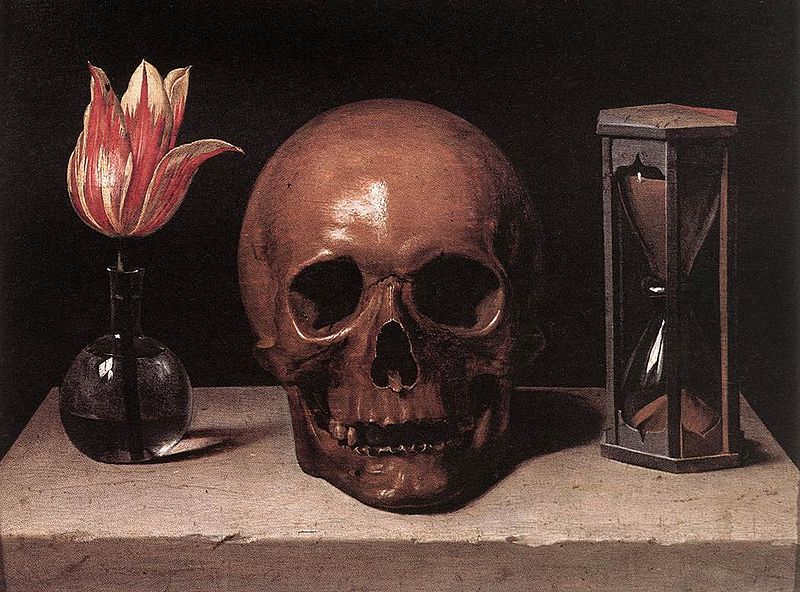
“Vanity” by Philippe de Champaigne (17th century): A Vanitas painting featuring symbols of life’s futility, including skulls and clocks

“The Three Ages of Man” by Giorgione (c.1500-1501): Depicts three male figures at different life stages, reflecting on the passage of existence

Minimum Monument (Melting Men)” by Néle Azevedo: Ice sculptures that melt away, symbolizing the ephemeral nature of contemporary art and raising awareness about climate change.

National Times” (2016) by Agustina Woodgate: This installation features a row of clocks that erode their own numbers through continuous movement, symbolizing the wear of labor on the human spirit

Allegory of Vanity” by Antonio de Pereda: An early iconic work that includes various symbols of time’s passage, such as clocks, an hourglass, and skulls, emphasizing the transient nature of life and material possessions

“Against the Run” (2015) by Alicja Kwade: A public clock that subverts traditional notions of time with its numbers rotated and hands moving backward, challenging our standard perceptions of timekeeping

Escapement” (2009) by Raqs Media Collective: An installation of two dozen clocks, one for each time zone, with one displaying words instead of numbers, inviting reflection on the global and personal impacts of time

Two shakes, a tick and a jiffy” (2009) by Julieta Aranda: This work introduces the notion of decimal time, questioning societal norms of timekeeping and the consensus needed to enforce them

Clock of the Académie Française” (1929) by André Kertész: A photograph capturing the clock in Paris’ Académie Française, offering a novel perspective on time through its alignment with the scene below
 SHUWEN